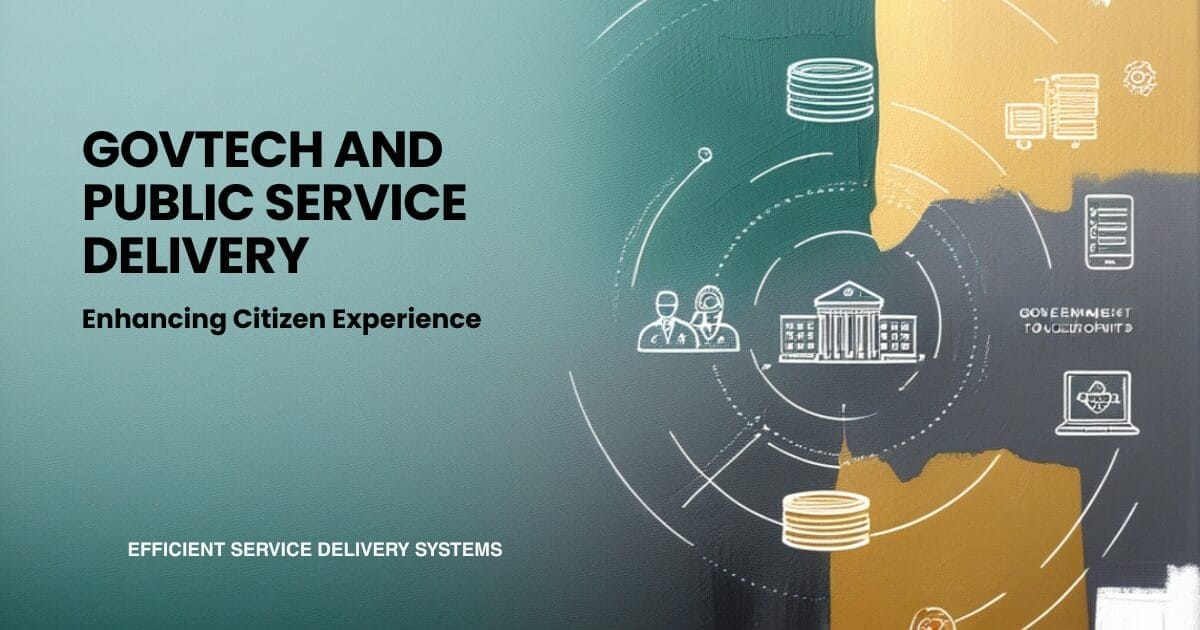
GovTech and the Future of Public Service Delivery in Africa
GovTech public service delivery in Africa is no longer a pilot programme or a donor-funded experiment. It is becoming a core competency of modern African government. From the National Identity Management Commission’s digital identity rollout in Nigeria to Rwanda’s Irembo citizen services platform, the continent now has concrete evidence that technology can transform how public services reach citizens.
But GovTech’s potential in Africa is far from fully realised. The majority of government services on the continent are still delivered through physical offices, paper documents, and manual processes that are slow, opaque, and inaccessible to millions of citizens. Closing this gap is one of the defining governance challenges—and opportunities—of the current decade.
What GovTech Is Transforming
Citizen Identity and Authentication
Digital identity is the foundation of modern public service delivery. When governments can reliably authenticate citizens digitally, they can deliver services remotely, eliminate fraud in benefit programmes, and create seamless, personalised citizen experiences. Nigeria’s National Identification Number (NIN) system, despite its implementation challenges, represents a foundational investment in this direction.
Payment and Revenue Collection
Digital payment infrastructure is transforming how citizens pay for government services and how governments collect revenue. Electronic payment systems reduce leakage, improve transparency, extend access to citizens without bank accounts through mobile money, and generate data that improves financial management. States that have invested in digital revenue platforms have seen significant improvements in internally generated revenue.
Permit, Licence, and Registration Services
Business registration, professional licensing, land permits, vehicle registration—these are high-demand government services that have historically required multiple physical visits and long waits. GovTech platforms that digitise these services reduce the compliance burden on citizens and businesses, reduce corruption opportunities, and improve the regulatory environment for economic activity.
Social Protection Delivery
Technology-enabled social protection—from digital beneficiary registration to direct-to-account cash transfers—is improving the targeting accuracy, coverage, and transparency of social programmes across Africa. The World Food Programme’s digital transfer programmes in Nigeria and other African countries demonstrate the scale of impact that GovTech can achieve in social protection delivery.
The GovTech Challenges Africa Must Address
Digital Divide and Access Equity
GovTech that only works for citizens with smartphones and reliable internet excludes the most marginalised. Africa’s GovTech must be designed for the full range of citizen contexts—from urban smartphone users to rural feature phone users to citizens with no personal device at all. USSD, SMS, agent networks, and community access points are essential components of inclusive GovTech design.
Interoperability Between Government Systems
The most valuable GovTech services require multiple government systems to share data in real time. Yet most African governments maintain siloed databases that cannot communicate with each other. Building interoperability infrastructure—shared APIs, common data standards, central identity repositories—is a prerequisite for next-generation GovTech.
Sustainability and Procurement
Many successful GovTech pilots in Africa have not scaled because governments could not sustain the investment after initial donor funding ended. Sustainable GovTech requires integration into government budget cycles, local technical capacity to maintain and evolve systems, and procurement approaches that avoid long-term vendor lock-in.
Key Takeaways
- GovTech is reshaping public service delivery across Africa in identity, payments, permits, and social protection.
- Inclusive GovTech must be designed for the full range of citizen connectivity and device contexts—not just smartphone users.
- Interoperability between government systems is the infrastructure prerequisite for advanced GovTech services.
- Sustainability after pilot phase requires integration into budget cycles and strong local technical capacity.
- The future of African GovTech belongs to governments that invest equally in technology and institutional transformation.
Frequently Asked Questions
What is GovTech and how does it differ from e-Government?
GovTech is a broader term than e-Government. E-Government focused primarily on putting government services online. GovTech encompasses digital service delivery, data-driven decision making, AI in government operations, digital public infrastructure, and innovation ecosystems that engage private sector and civil society alongside government.
Which African countries are leading in GovTech?
Rwanda, Kenya, South Africa, and Egypt are consistently recognised as GovTech leaders on the continent. Nigeria has significant scale and momentum in digital identity and payments. Niger State’s work under NSITDEA represents an emerging subnational model for African GovTech.
How can citizens get involved in GovTech design?
Citizens can engage through public consultation processes, user testing panels for new digital services, civil society organisations that advocate for citizen-centred GovTech design, and online feedback platforms that well-designed government services should include.
About the Author
Suleiman Isah is the Director General of NSITDEA, Niger State’s agency for digital economy transformation, and a GovTech practitioner. Read more.
Related: GovTech Pillar Page | Digital Transformation for African Governments